
A Noisy Day in Parliament: Sense about Science Evidence Week
Parliament is a noisy place. Debates, competing priorities and countless conversations all vie for attention. It was fitting, then, that our contribution to this year’s Evidence Week focused on another kind of noise: the everyday sound environments in which young children learn.
Last week, Dr Gemma Goldenberg, Dr Katie Daubney and I travelled to Westminster to represent the Institute for the Science of Early Years and Youth at Evidence Week in Parliament. Organised by Sense about Science, the annual event brings together researchers, parliamentarians, parliamentary staff and members of the public to examine how evidence is used in policymaking. Now in its ninth year, Evidence Week took place from 6 to 10 July 2026 and included rapid policy briefings designed to fit around parliamentary business.
Our invitation reflected ISEY's growing programme of research exploring how early learning environments influence children's development, bringing together expertise from psychology, neuroscience and education to inform both policy and practice.
For us, the day was less about explaining why noise matters, something we have explored throughout this blog series, and more about asking what the evidence should lead us to do.You can also explore our accompanying Evidence Week Policy Brief, which summarises the evidence and recommendations discussed in Parliament.
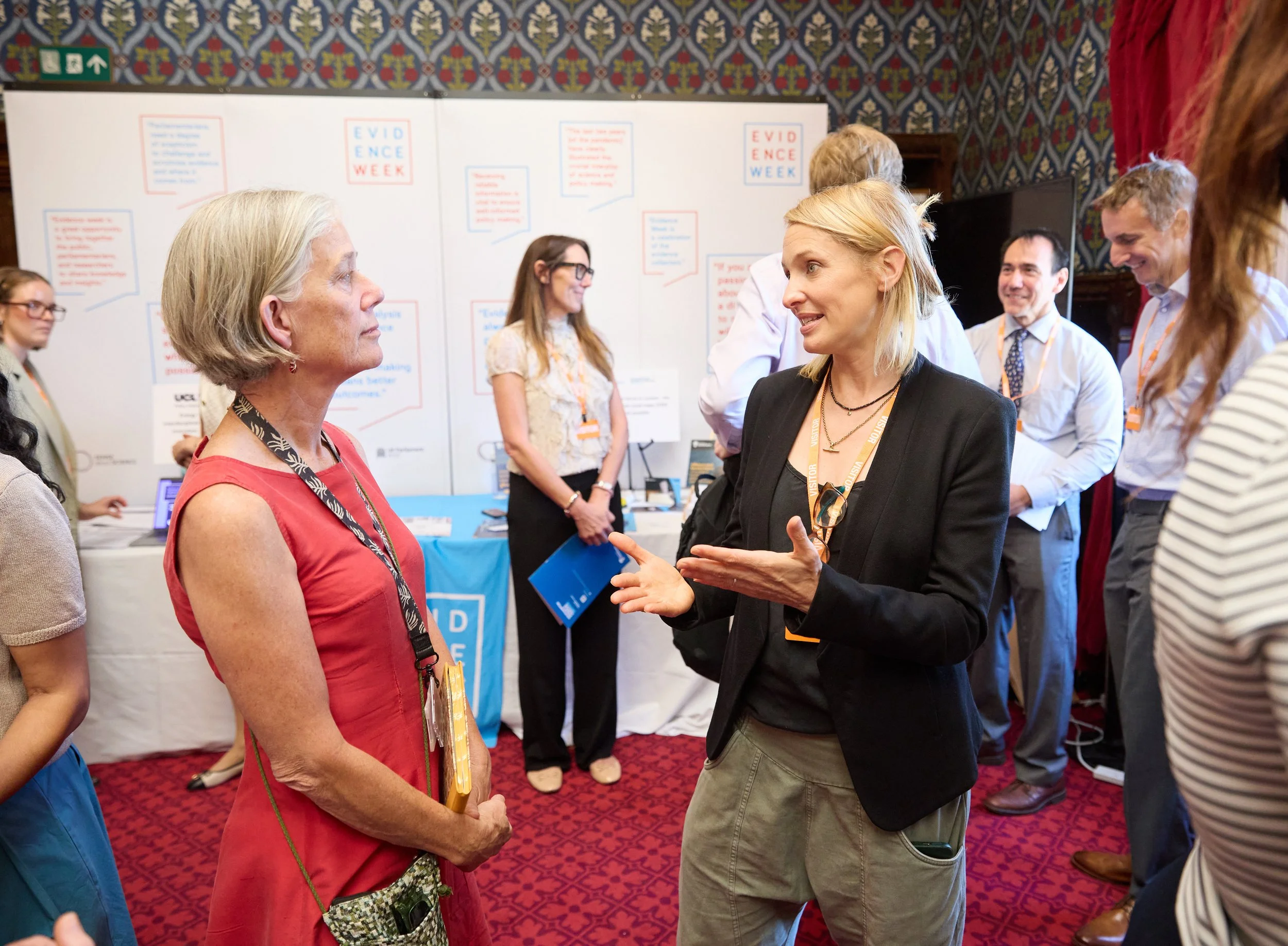
Dr Katie Daubney discusses the impact of noise on young children's development with Professor Dame Angela McLean, the UK Government Chief Scientific Adviser.
Taking the evidence to Westminster
Our briefing drew on our current noise project and Dr Goldenberg’s previous research comparing children’s experiences across matched indoor and outdoor learning sessions.
Even when activities and resources were kept consistent, outdoor sessions were significantly quieter than indoor sessions. Children’s resting heart rates were also lower when they were seated and listening to a teacher outdoors, suggesting lower levels of physiological stress. Indoors, higher noise levels were associated with higher resting heart rates, while children who found it most difficult to sustain attention indoors showed notable improvements when activities moved outside (Goldenberg et al., 2024).
These findings formed the starting point for a wider discussion about the quality of children’s learning environments. Our central message was that acoustics should not be treated as a specialist or peripheral concern. The sound environment can influence children's ability to hear speech clearly, sustain attention and participate fully in everyday learning. Research has consistently shown that background noise can disrupt children’s speech perception, listening comprehension and cognitive performance, with some children more affected than others (Klatte et al., 2013; Vander Ghinst et al., 2019).
The policy questions were therefore practical. How should acoustic quality be reflected in early years guidance? Should noise be more explicitly recognised as a barrier to inclusion? How can new and existing educational spaces be designed to support children’s communication and wellbeing?
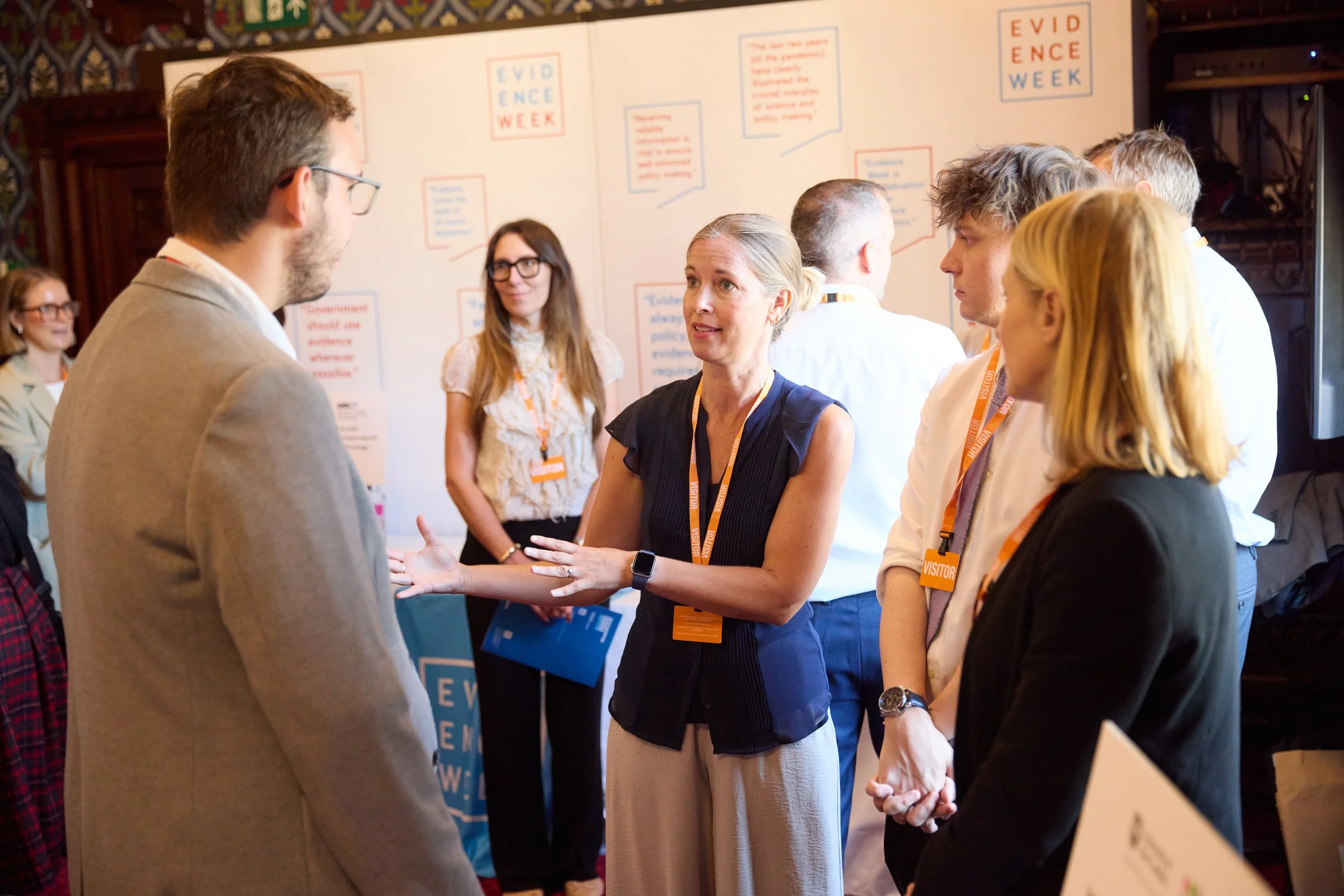
Dr Gemma Goldenberg discusses her research with Gregory Innes, Parliamentary Assistant to Jodie Gosling MP, highlighting evidence that young children's resting heart rates are lower during matched outdoor learning activities than equivalent indoor sessions.
Why these conversations are important to have now
The timing of Evidence Week felt particularly significant. Early years education is undergoing substantial change, including the expansion of funded childcare, growth in school-based nursery provision, revisions to the Early Years Foundation Stage and inspection arrangements, and major proposals for reforming the SEND system.
From September 2025, eligible working families have been able to access up to 30 funded hours from the term after their child turns nine months. The government is also expanding school-based nursery provision and has committed substantial additional funding to increase the number of early education places (Department for Education, 2025).
At the same time, the government’s 2026 SEND consultation proposes changes to early identification, inclusion, professional development and support across early years provision, while Ofsted’s renewed inspection approach places greater emphasis on inclusion and the experiences of children with SEND and other barriers to learning (Department for Education, 2026; Ofsted, 2026).
Each reform is being considered separately, but they converge in the environments children experience each day.
Expanding access to early education is important, but the quality of the spaces being expanded is arguably just as important. Increasing inclusion within mainstream provision requires environments that can accommodate a wider range of sensory, communication and attention needs. Changes to curriculum and accountability frameworks create opportunities to consider whether the physical conditions for learning receive sufficient attention.
Our policy briefing therefore proposed three broad areas for action: aligning capital investment with evidence about learning environments, establishing clearer and more consistent acoustic expectations across different forms of provision, and embedding acoustic quality within SEND, inclusion and accountability frameworks.
These are not calls for silent nurseries. We understand that childhood is noisy, and joy is often noisy. Early years settings should be active, social and full of communication. The issue is whether their acoustic conditions allow children to distinguish the speech and interactions that matter from the surrounding sound.
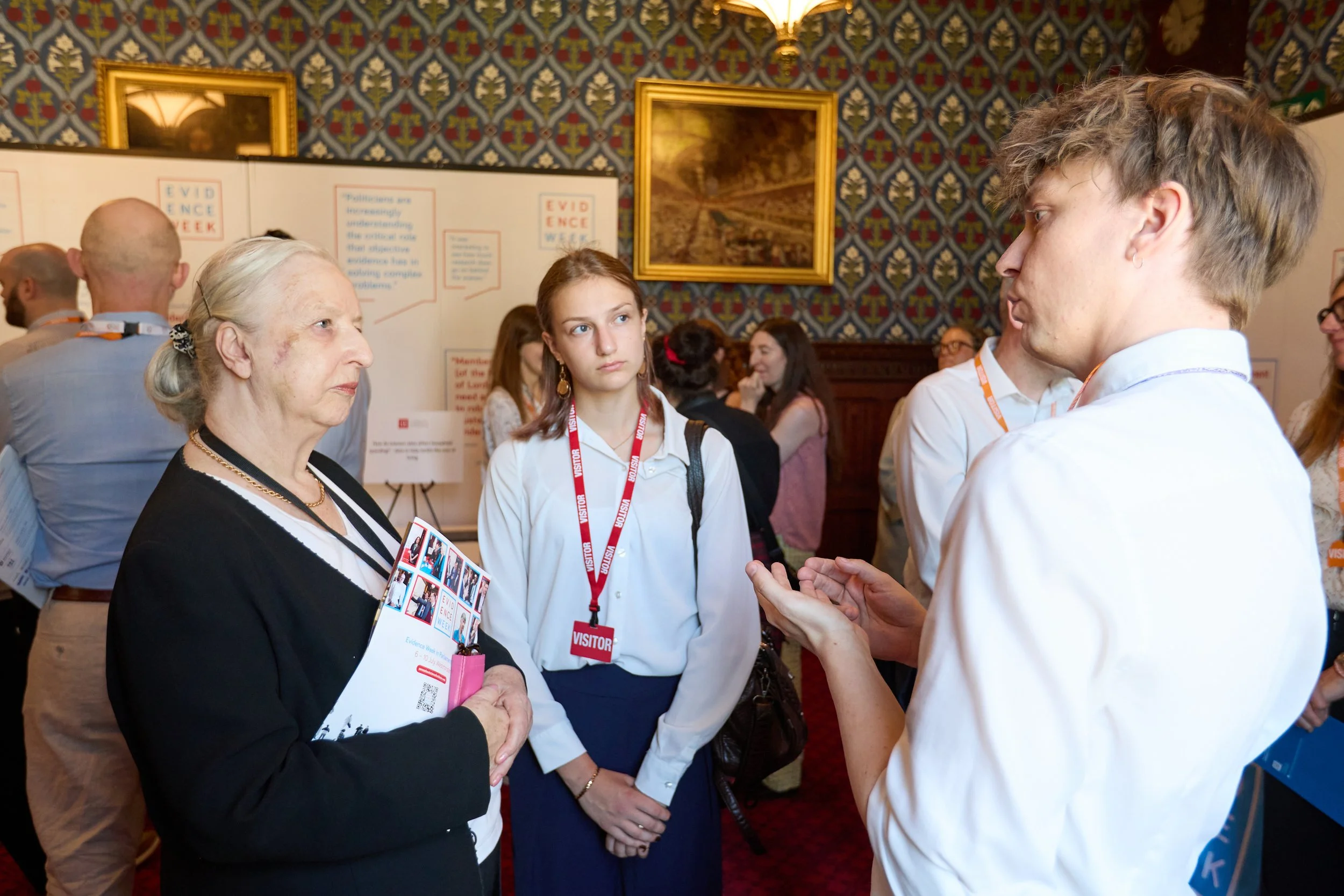
Conor Bathgate and Baroness Browning discuss the impact of acoustic environments on children with Special Educational Needs and Disabilities (SEND)
Different perspectives on a shared issue
One of the strengths of Evidence Week was the range of perspectives brought to the discussion.
Baroness Browning was particularly interested in how acoustic environments might affect children with Special Educational Needs and Disabilities, and how this work could connect with the developing SEND reforms. This prompted discussion about whether sensory environments receive sufficient attention within wider conversations about inclusion in mainstream education.
Vicky Elliott was interested in the developmental processes underpinning the research and the strength of the existing evidence linking acoustics with children’s learning, stress and development.
Staff from the offices of Dr Lauren Sullivan MP and Jodie Gosling MP focused on the implications for educational inequalities, including whether poor-quality learning environments may place an additional burden on children who are already at greater risk of falling behind. Dr Sullivan is also Chair of the Parliamentary Office of Science and Technology Board, making the discussion particularly relevant to the wider relationship between research and Parliament.
Although the conversations began from different starting points, they repeatedly returned to the same issue: how can evidence about children’s everyday experiences be translated into proportionate and achievable policy?
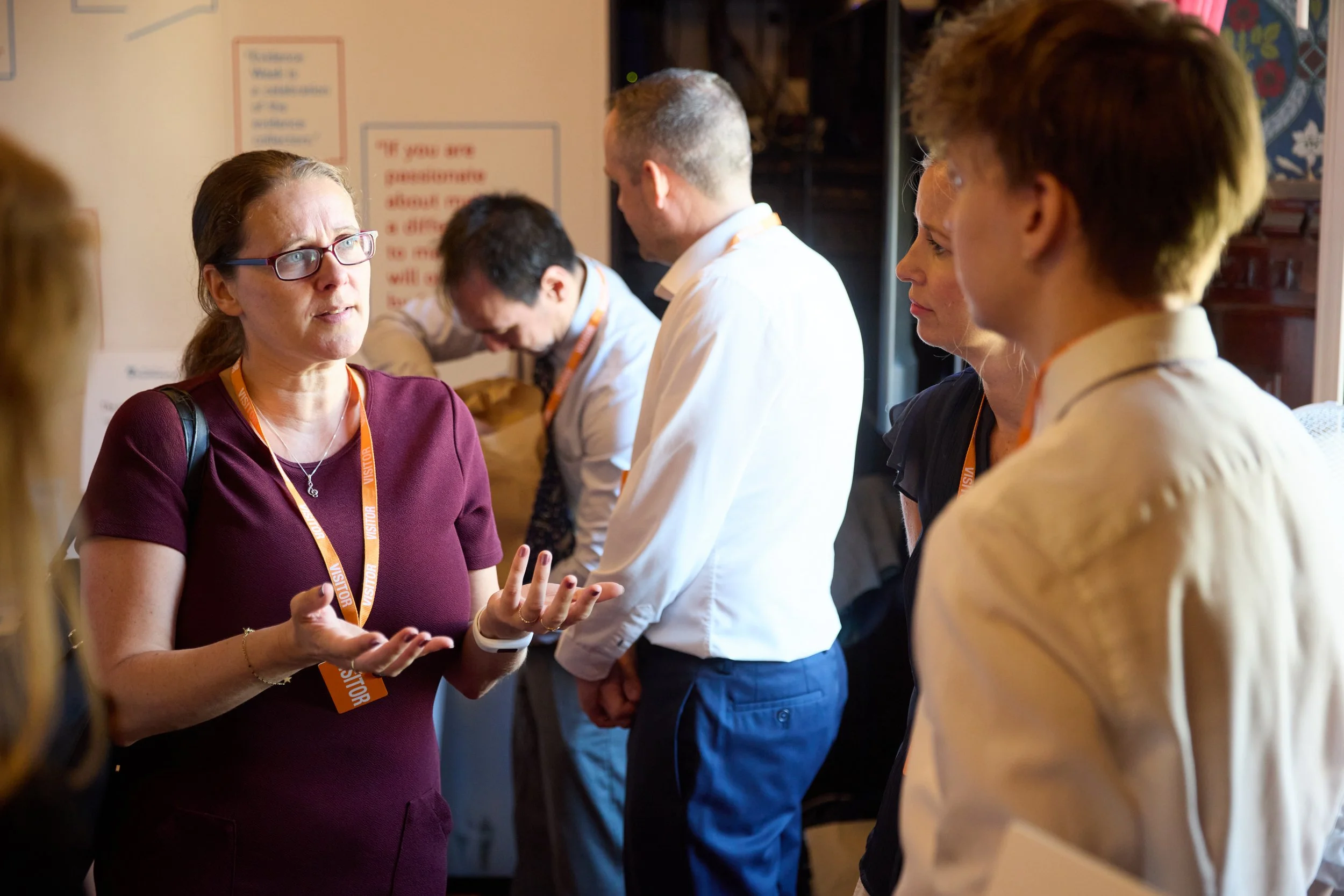
Vicky Elliott, Director of the IfG Academy at the Institute for Government, discusses how research can better inform evidence-based policymaking.
From implementing policy to informing it
For me, the day also offered a different perspective on the relationship between research and policy.
Before beginning my PhD, much of my career involved implementing policy. I worked in early years settings, leadership, local government and higher education, often translating national expectations into decisions about staffing, environments, curriculum and practice.
At Evidence Week, the conversation moved in the opposite direction. Rather than asking how a policy should be implemented, we were discussing what evidence should inform policy before decisions are made.
That distinction was interesting for me. Policies that appear straightforward at a national level can become far more complex when they meet real settings, finite budgets, unsuitable buildings and the varied needs of children and families. Researchers need to understand those constraints. Policymakers also need access to evidence that reflects the reality of children’s daily lives.
Good policy engagement is a conversation about what the evidence shows, where uncertainty remains, which changes are realistic and what further research is needed.
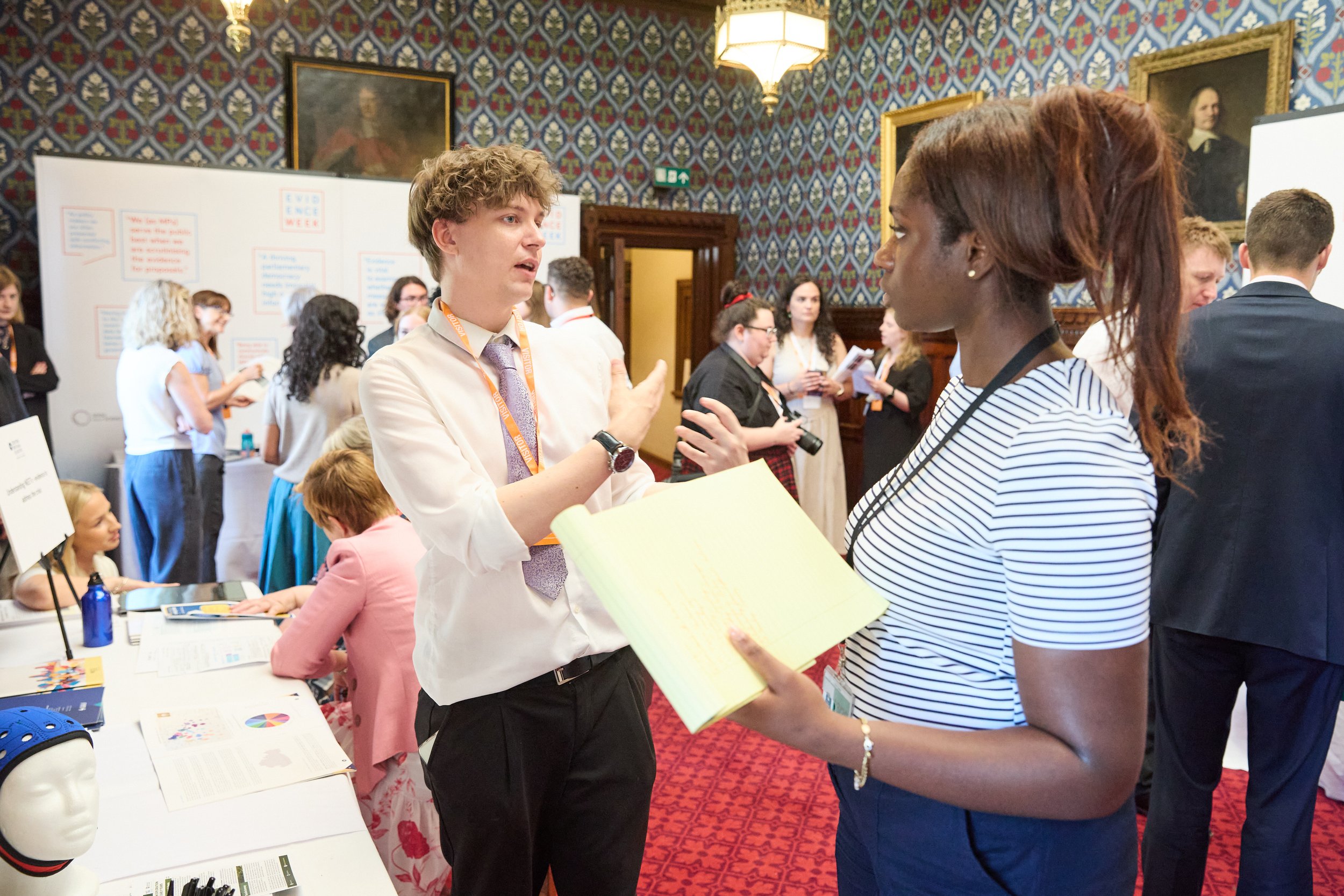
Conor Bathgate shares the latest progress of the ISEY noise project with a member of Sarah Olney MP's team.
Cutting through the noise
At ISEY, we want research to work with people and for people. That requires engagement with practitioners, children, families, community organisations and policymakers throughout the research process, rather than waiting until a study has ended.
Evidence Week provided an opportunity to test how our ideas resonated beyond the research team. The questions we received highlighted the relevance of acoustics to current debates about SEND, inequality, school readiness and the expansion of early years provision. They also helped identify where the evidence needs to become clearer and more directly connected to policy choices.
Parliament may be full of competing forms of noise, but there remains a clear appetite for rigorous evidence that speaks to practical problems.
Our task now is to continue building that evidence and to ensure that children's everyday learning environments remain firmly on the policy agenda.
References and further reading
Department for Education. (2025). Giving every child the best start in life.
Department for Education. (2026). SEND reform: Putting children and young people first.
Department for Education. (2026). Early years foundation stage statutory framework: For group and school-based providers. Setting the standards for learning, development and care for children from birth to five. Department for Education.
Goldenberg, G., Atkinson, M., Dubiel, J., & Wass, S. (2024). Outdoor learning in urban schools: Effects on 4–5 year old children's noise and physiological stress. Journal of Environmental Psychology, 97, 102362. https://doi.org/10.1016/j.jenvp.2024.102362
Klatte, M., Bergström, K., & Lachmann, T. (2013). Does noise affect learning? A short review on noise effects on cognitive performance in children. Frontiers in Psychology, 4, 578. https://doi.org/10.3389/fpsyg.2013.00578
Ofsted. (2026). Early years inspection information: For use from September 2026.
Shield, B., & Dockrell, J. (2003). The effects of noise on children at school: A review. Building Acoustics, 10(2), 97–116.
Vander Ghinst, M., Bourguignon, M., Niesen, M., Wens, V., Hassid, S., Choufani, G., Jousmäki, V., Hari, R., Goldman, S., & De Tiège, X. (2019). Cortical tracking of speech-in-noise develops from childhood to adulthood. The Journal of Neuroscience, 39(15), 2938–2950.