


OUR LAB
ONGOING GRANTS

SEMINAR ROOM
Imaginarium Lab
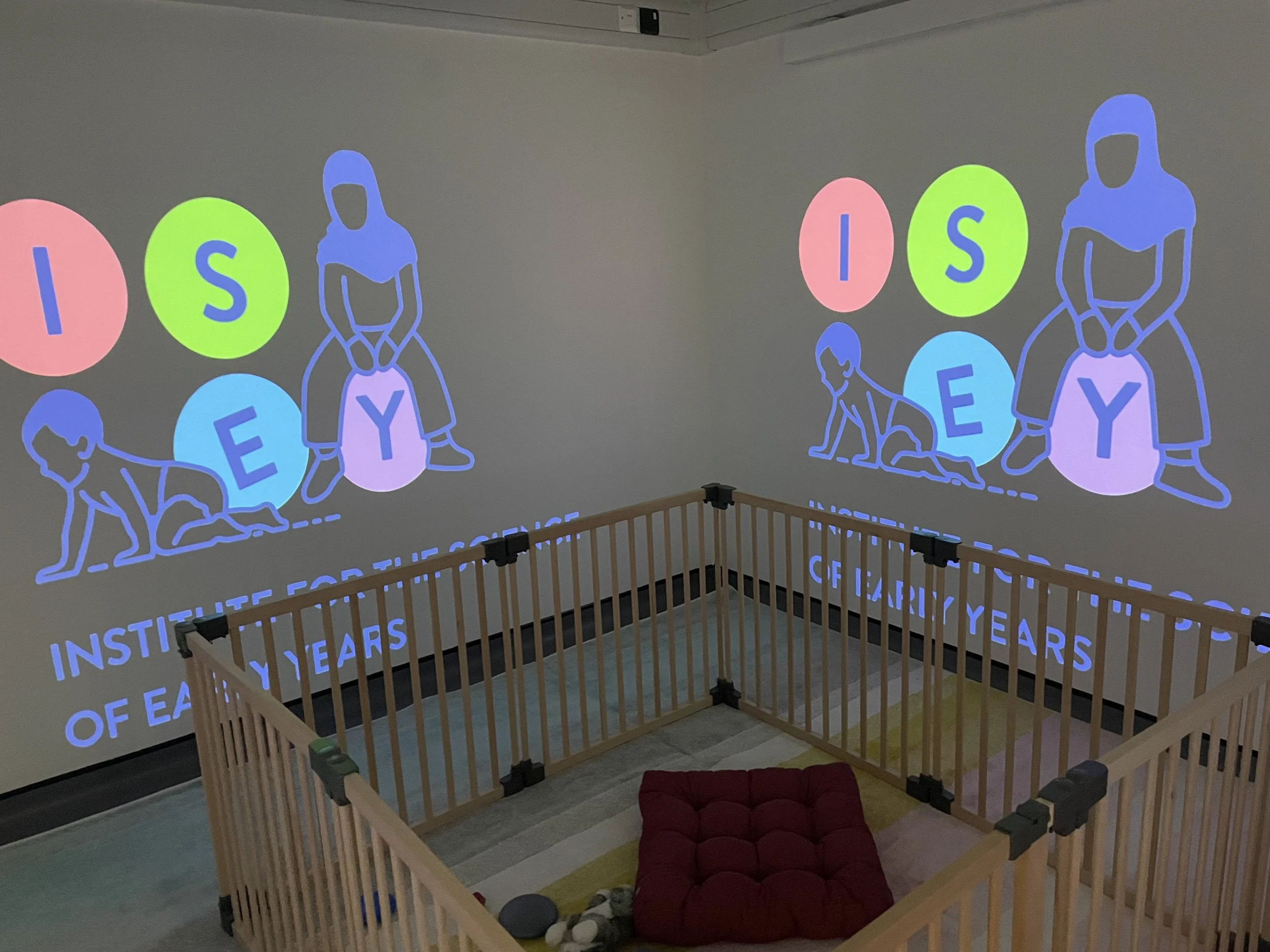
The Imaginarium Lab is an immersive research room designed to study how young children learn and interact with their surroundings. Four walls are equipped with large, floor-to-ceiling projections that can instantly transform the space into settings such as a forest, ocean, classroom, or a multi-sided 3D environment. Although the system supports full 360° projection, the primary focus is on the four-wall display to create an engaging yet comfortable experience. At the center is a safe, open play area where infants and young children can move, explore, and interact naturally with caregivers.
The room is equipped with child-friendly technologies that operate quietly in the background. Wearable sensors capture brain activity, heart rate, vocalizations, and eye movements, while six OptiTrack motion-capture cameras track actions such as reaching, crawling, and pointing. These tools allow researchers to observe how children respond to different environments, interact with parents, and explore the space, providing high-quality data in a setting that feels natural and welcoming.
RESEARCH ROOM
NEURO IMAGING LAB
EYE TRACKING ROOM LAB
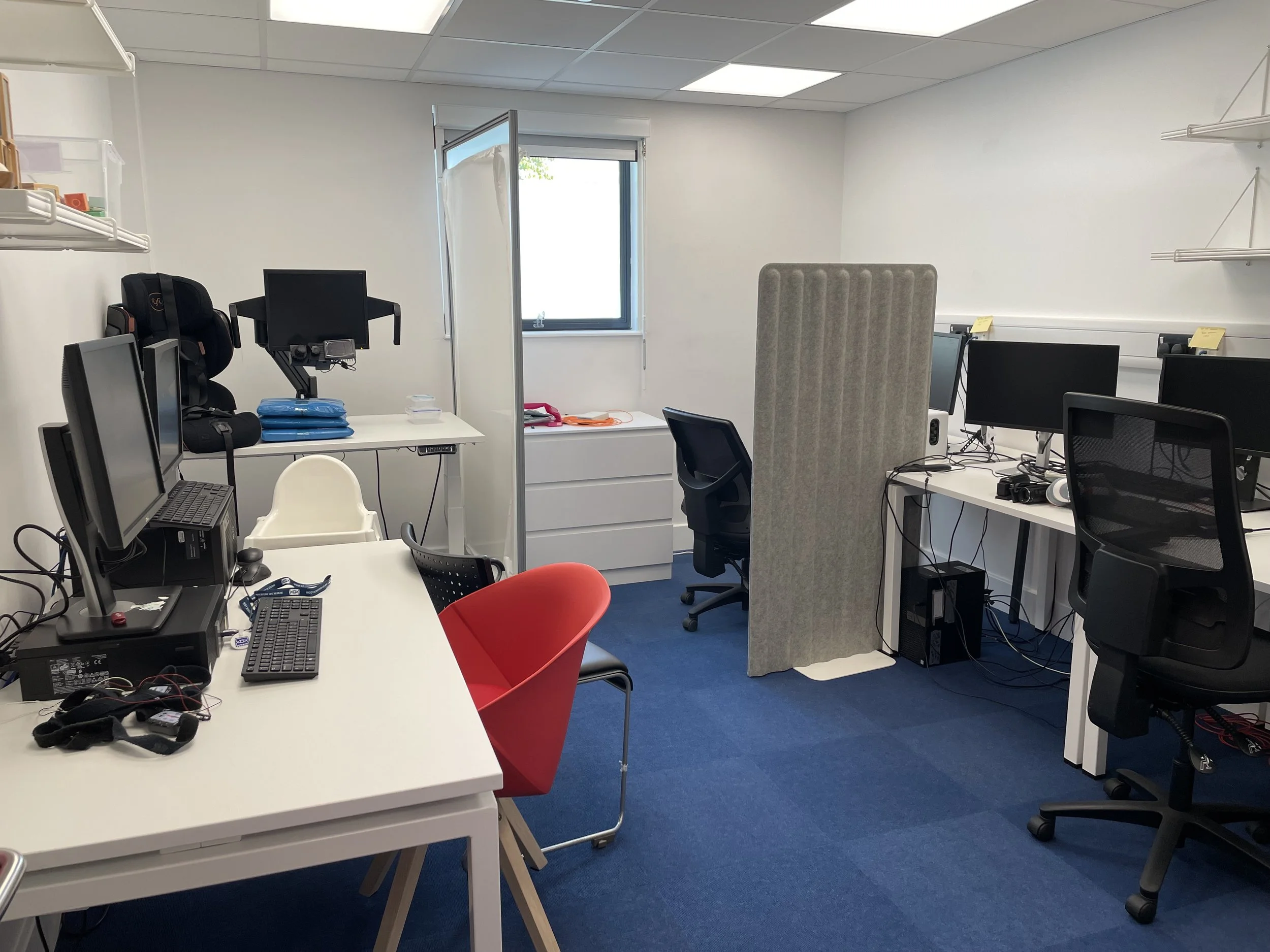
The Eye Tracking Lab investigates how children engage with digital screens, including videos, animations, educational media, and interactive content. Using high-precision, non-wearable eye-tracking systems such as Gazepoint and EyeLink, we can measure exactly where children look, how long they focus on specific elements, and how their eyes move during fast or complex scenes all while they sit comfortably and view content naturally. This work helps us understand how visual design features like saliency, pacing, motion, color, and scene transitions influence attention and comprehension.
To gain a more complete picture of how children process digital content, the lab synchronizes eye-movement data with other physiological measures, including EEG, heart rate, and detailed behavioral coding. Together, these tools allow researchers to examine how different screen features affect cognitive load, emotional engagement, attention quality, and learning. By analyzing both where children look and how their bodies and brains respond, the Eye Tracking Lab helps identify which types of digital content best support healthy, focused, and meaningful viewing experiences.

Early development pathways to later-life ADHD
Although ADHD tends to be diagnosed in school-aged children, most of the factors that increase the likelihood of a child developing ADHD are present from birth. This project, funded by an MRC Project Grant awarded jointly to ISEY and the BONDS lab at Birkbeck, will use techniques including dual EEG and home recordings to look at how early-emerging behavioural changes, detectable in early infancy, may lead to developmental cascades that can lead to ADHD.


Autonomic Arousal and Non-Cry Vocalisations: Its links to Caregiver Anxiety
We know that caregivers reinforce certain infant behaviours starting from birth. Caregiver-infant interpersonal regulatory processes are related to physiological arousal states and vocalizations within the first year of life. Most co-regulation research has focused on infant cries, but atypical non-cry vocalizations are also highly associated with the development of certain neurodevelopmental psychopathologies. The extent to which infant co-regulation takes place during non-cry vocalisations is, however, not yet well understood. In this project, funded by Scientific and Technological Research Council of Türkiye, we use infant-caregiver worn home wearables to detect autonomic arousal and non-cry vocalisations.


Story-telling interventions for children from under-privileged backgrounds
Evidence from neuroscience suggests that story-telling out to be beneficial for children for a wide range of different reasons - some of which we discuss here. But very little research has looked at whether telling stories with children actually affects, for example, their language development, or the quality and complexity of their spontaneous play. ISEY is working on a project led by the Discover Children’s Story Centre together with the London Early Years Foundation to administer a story-telling intervention to children from underprivileged backgrounds, to track its short- and longer-term effects.


The social infant: an artistic observation of infant sociality
Can group life develop in infancy? What does it look and sound like? Can artistic research produce a new understanding of infancy through a sensory, observational image? A collaboration between the Royal Institute of Art in Stockholm and ISEY, and additional partners of the Centre for Creative and Cultural Practice and LUX, Emanuel Almborg’s project, The Social Infant, will attempt to answer such questions. This project will re-evaluate film’s observational mode to produce a new image of early childhood.


ONGOING PHDS

Understanding the neural pathways through which unpredictable caregiver behaviours affect development
Children exposed to unpredictable, fragmented signals from their mothers during their first year of life often show later-life impairments across a range of different outcomes. This project, funded by an ESRC UBEL DTP studentship to Katie Lancaster, uses state-of-the-art techniques, including dual EEG recordings within complex, dynamic, real-world interactions, to investigate how unpredictable or inconsistent caregiver responsiveness affects how children’s brains process social information from caregivers.


Impact of Predictable Rhythms and Patterns on Child Development in Early Years and Primary Education
Research shows predictable environments support neural pathway development and improve outcomes, while unpredictable environments disrupt healthy development and lead to various disadvantages. This study explores how predictable environments support neural pathway development and improve outcomes for children aged 3-7 years in an East London primary school. Funded by a knowledge exchange studentship for Lisa Ann Peters, the study will use head-mounted cameras, microphones, and heart rate monitors worn by teachers and children to assess how increased predictability influences focus, learning, stress management, and pro-social behaviours. It will also examine the relationship between children's responses to the intervention and their home environments, aiming to provide deeper insights to better support their development.

Early home environments and ADHD: Analysis of High-Risk Populations
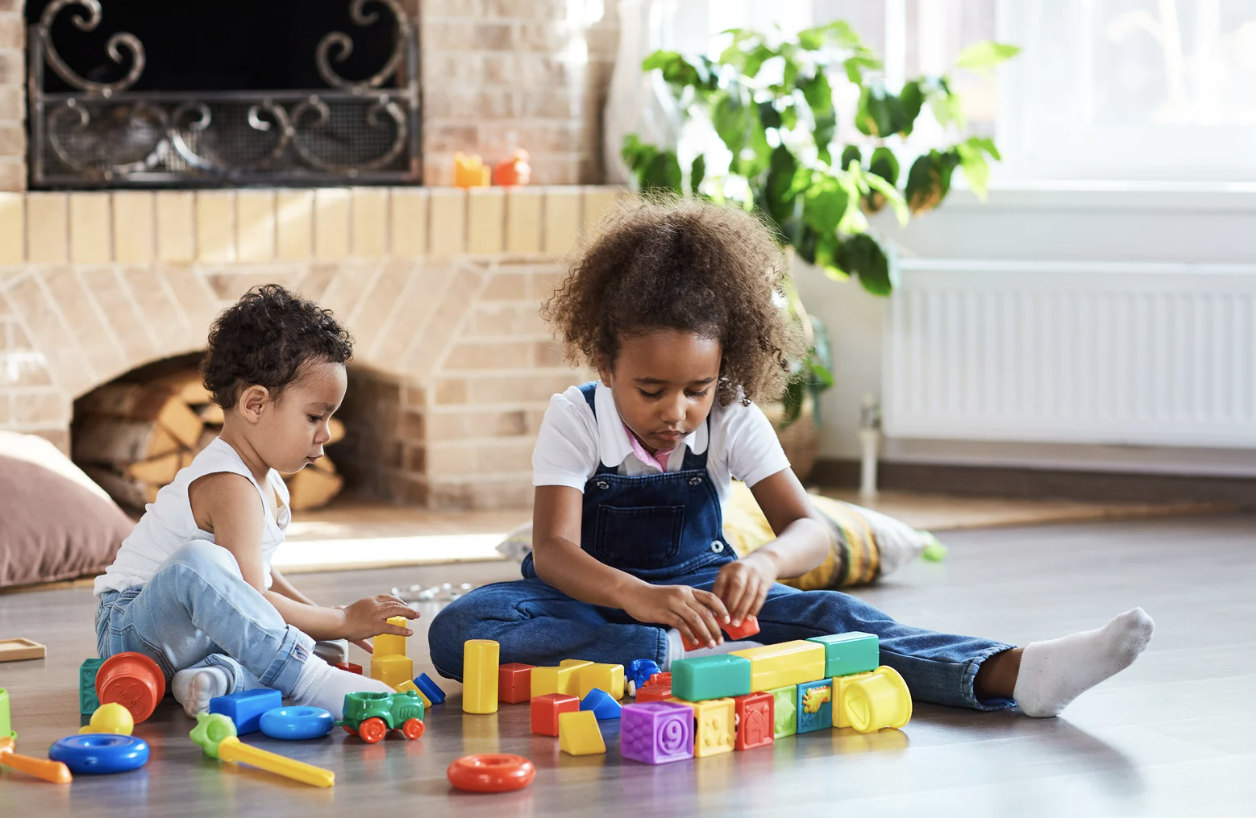
Early home environments are critical for child development and are key targets for early intervention. However, which specific characteristics contribute to atypical development, particularly in ADHD, remains unclear. Additionally, ADHD symptoms are typically recognised in school-aged children, making it challenging to implement early interventions during critical developmental stages. This study, funded by a UEL Research Excellence PhD Studentship for María José Peñaherrera, investigates how specific aspects of early home environments—such as predictability and noise—affect development in infants at high and low risk for ADHD. Using our state-of-the-art next-generation wearable devices, we collect naturalistic data from home settings to better understand these environmental influences.

Exploring the impact of the outdoor environment on students attending an East London Pupil Referral Unit
Each year in England, around 8,000 children are permanently excluded from school and placed in alternative provision, such as Pupil Referral Units (PRUs), where students facing adversity, including special educational needs, mental health issues, poverty, and abuse, are overrepresented. Early adversity is linked to poorer health, educational, and economic outcomes, which aligns with evidence that children in PRUs experience worse educational and health outcomes, prompting policy efforts to address exclusion inequalities and improve alternative provision. While outdoor environments are known to benefit children's development, most research focuses on mainstream settings, with limited studies on their impact on PRUs. This study investigates how outdoor environments influence well-being, behaviour, and stress regulation in students at a PRU in East London. This project is funded by an ESRC UBEL DTP studentship to Ilia Papadaki, in collaboration with Newham Learning.

PREVIOUS PROJECTS

Baby learning and infant sensitivity to the environment (BLAISE)
Almost all research looking at how stress affects early development has concentrated on static, time-invariant snapshots of stress – such as questionnaires, or ‘static snapshot’ measures such as cortisol or allostatic load. But stress is, by definition, a dynamic system that mediates adaptation to a fluctuating environment. In this project, funded by the Economic and Social Research Council, we used wireless miniatured wearable sensors and naturalistic neuroimaging to test how dynamical fluctuations in children’s early physical environment (sights and sounds) and social environment (people around them) affected neural activity, physiology and behaviour across multiple time-scales.


Nature access for urban children
In 1800 5% of the world’s children were raised in cities. Today, that figure is 55%. Children from the UK spend less time playing outdoors than previous generations and are less likely to have nature near their homes. Children from urban areas and lower-income households are less likely to visit natural environments than their peers, raising the importance of outdoor access during school time. This PhD project, which was conducted by Gemma Goldenberg and funded by the ESRC in collaboration with Jan Dubiel and a partnership with Newham Learning, looked at how children’s learning, behaviour and stress levels differed between indoor and outdoor learning environments at urban schools. The project found that even when activities and resources were matched across settings, learning sessions were significantly less noisy outdoors and children’s resting heart rates were significantly lower. The effects of the outdoor environment were different, with children struggling with their attention and behaviour the most indoors and showing the greatest improvements outside.
You can read some of these findings in this published paper and read the whole thesis here. Gemma also wrote a chapter about the impact of outdoor settings on attention in this book.

Heart 2 Heart (H2H)
Clinically elevated anxiety represents the most prevalent child mental health condition in the world. Available evidence suggests a key role of environmental influences in the development of anxiety, with recent research suggesting that early childhood is a crucial period for identifying environmental risk factors. This project, funded by the London Interdisciplinary Social Sciences, used naturalistic biobehavioural recording techniques to examine the mechanisms of emotion dysregulation in dyads at elevated likelihood of anxiety conditions and other psychiatric disorders.


Early Life Sensitivity (ELSA)
Everything that infants learn during early life comes from things that they pick up from their early environment. But how does infants’ sensitivity to information in their environment change and develop over time? This project looked at what makes some children more, or less sensitive to social signals from their caregivers, and at how children’s behavioural response to social arousal changed and developed over time.


Studying the microdynamics of social interaction
Recent research has suggested that interpersonal neural entrainment develops during social interaction. But how, mechanistically, is interpersonal neural entrainment developed, and maintained? This project, funded by the Leverhulme Trust, addressed this question by administering targeted experimental interventions to measure the effect of the microdynamics of parent-child interaction.


Joint dynamics during infant learning (JDIL)
Infants spend most of their waking time interacting with their caregivers, and the mechanisms through which these dynamic social exchanges shape the development of sub-personal processes such as attention and learning remain mysterious. This project, funded by a Marie Curie postdoctoral fellowship, used live dual EEG recordings from infants and adults to look at social influences during early learning exchanges.
