
It’s too Loud in here to Learn… The Hidden Impact of Noise in Early Years Settings
Introduction: A familiar scene, the soundscape of the classroom
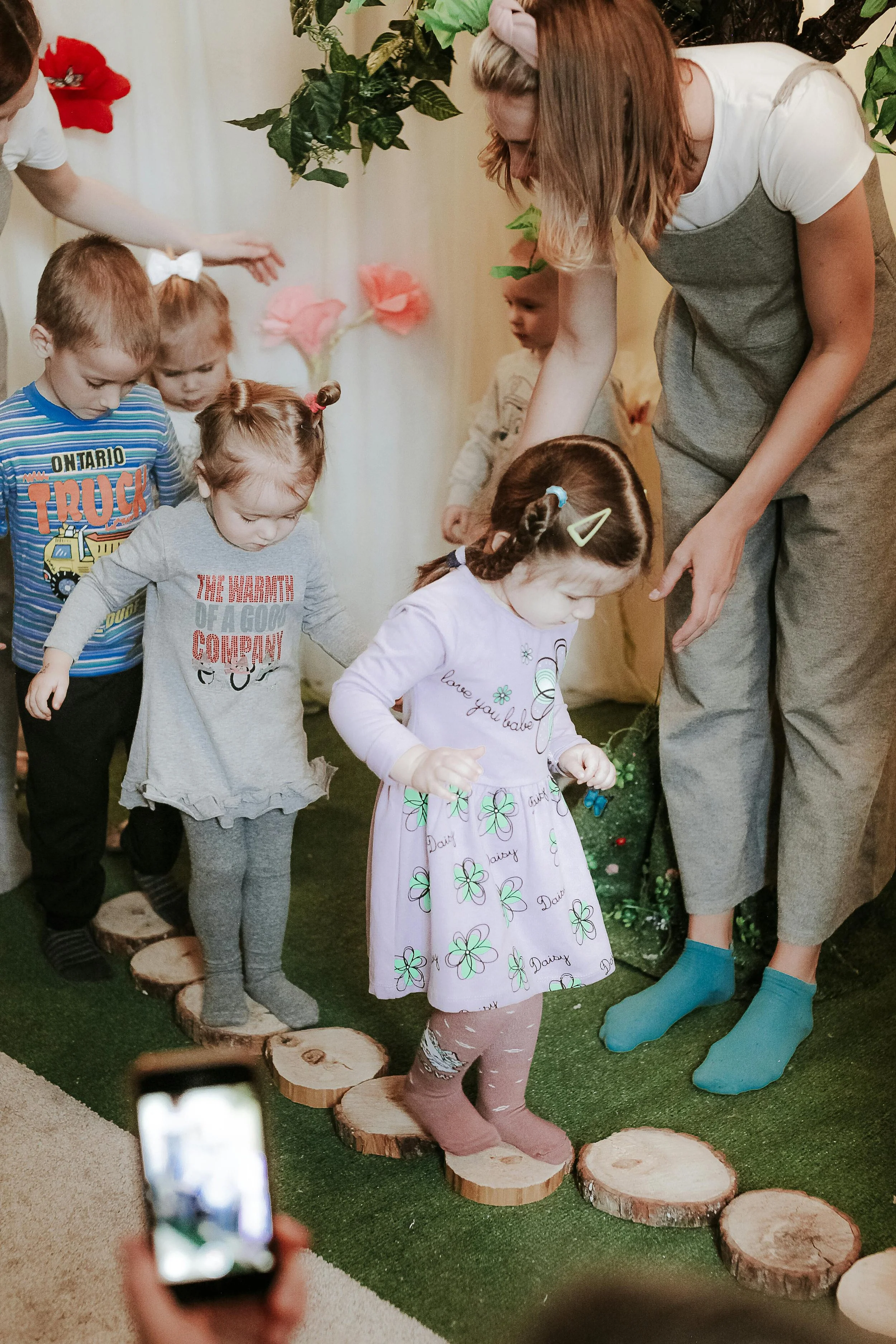
Imagine this: you are in the baby room. An adult calls across the room to welcome a child as they begin their day and greet their parent. Nearby, two children are negotiating, babbling and experimenting with early words. Across the space, another adult supports a child through co-regulation after morning drop-off.
For anyone who has worked in a baby room, this scene will feel familiar. The hum of activity rarely pauses. There is always sound: joyful, relational sound. But when does lively become overwhelming? And who is really coping as the day unfolds?
A growing body of research suggests that high noise levels in learning environments are more than an issue of comfort (Klatte, 2013; Fretes and Palau, 2025). They influence language processing, attention, stress regulation and long-term learning. For babies and young children, whose auditory and self-regulation systems are still developing, the soundscape is part of the learning environment itself.
What Do We Mean by “Noise”?
Noise can feel like a nebulous concept. After all, sound is one of the primary ways we experience and interpret the world. In early years settings, it's important to recognise that eliminating noise is not as simple as reducing it, because noise is woven into relationships, play, and communication. The question, therefore, is about more than how much noise exists, but what kind of noise exists in this environment, and how much of it. In practice, noise tends to fall into three broad categories.
Continuous background noise (ambient noise): the steady hum of appliances, ventilation or passing traffic. These sounds often go unnoticed but contribute to overall cognitive load.
Intermittent sudden noise (salient noise): abrupt sounds such as doors closing, banging or bursts of laughter. These interrupt processing and divert attention.
Competing speech: multiple voices creating acoustic masking (one sound covering another) and informational masking (competing speech interfering with meaning). In a room of early talkers, overlapping language can be cognitively demanding.
Young children’s auditory systems and executive functions are still maturing. Unlike adults, they have limited ability to filter background noise or prioritise one voice over another.
What Does the Research Tell Us Currently?
Language Development
Young children require a clearer signal-to-noise ratio than adults to process speech accurately. Auditory neuroscience studies show that speech perception becomes significantly more effortful when background voices compete for attention (Scott et al., 2004). For developing listeners, this additional effort reduces the cognitive resources available for comprehension and vocabulary acquisition.
Large-scale environmental research reinforces this point. The World Health Organisation’s guidelines on environmental noise report associations between chronic noise exposure and poorer reading comprehension and cognitive performance in children (Hygge, Evans, & Bullinger, 2002; WHO, 2018).
Attention and Executive Function
Noise increases cognitive load and reduces working memory performance. Research examining attentional control in early childhood shows that even background adult conversation or non-target speech can reduce sustained attention and interaction quality (Wass et al., 2011). When multiple speech streams compete, children’s working memory must work harder to filter relevant from irrelevant input.
These effects are not evenly distributed. Children learning English as an additional language, those with SEND, those with auditory processing difficulties, or those with attentional differences are likely to experience greater difficulty managing competing speech.
Stress and Regulation
Noise also has physiological consequences. Studies of children in high-noise environments have identified elevated cortisol levels and increased fatigue and irritability (Evans and Lepore, 1993). Sustained exposure to unpredictable or uncontrollable noise can contribute to heightened stress responses over time.
Goldenberg et al. (2024) found that indoor learning environments were significantly noisier than outdoor settings and that higher indoor noise correlated with increased resting heart rate, suggesting greater physiological stress.
Taken together, this evidence suggests that when a child appears disengaged or dysregulated, the explanation may not lie solely in motivation or behaviour. It may reflect the cognitive and physiological demands of navigating a complex auditory environment.
Lively vs. Overwhelming: The Nuance
It is important to remember that this discussion is not about creating silence in early years settings. Nor is it about taking an anti-play stance. Early years classrooms are vibrant spaces. They provide the foundation for children’s futures and reflect the society into which they will grow and participate. Social talk supports language development. Collaborative play often carries volume. Joy can be loud.
The key consideration is how sound functions within the environment and how it is experienced by the children within it. As practitioners, it can be helpful to reflect on the differences between predictable and unpredictable noise. For example, the shared rhythm of a familiar song during group time may feel contained and purposeful. In contrast, a sudden door closing, a hand dryer starting unexpectedly, or an adult calling across the room can interrupt concentration and regulation.
We might also consider the distinction between meaningful sound and competing sound. A focused interaction between an adult and a child supports communication and connection. However, when multiple conversations overlap and instructions compete for attention, children must divide their listening effort.
Finally, reflect on control. Is the sound within your environment largely manageable, or does it feel constant and difficult to influence? These small shifts in awareness can make a significant difference to children’s daily experience.
Practical Strategies for Early Years Settings
Environmental Adjustments: The environment is often described as the “third teacher”. Hard surfaces and large open spaces amplify sound. Small adjustments can make a difference.
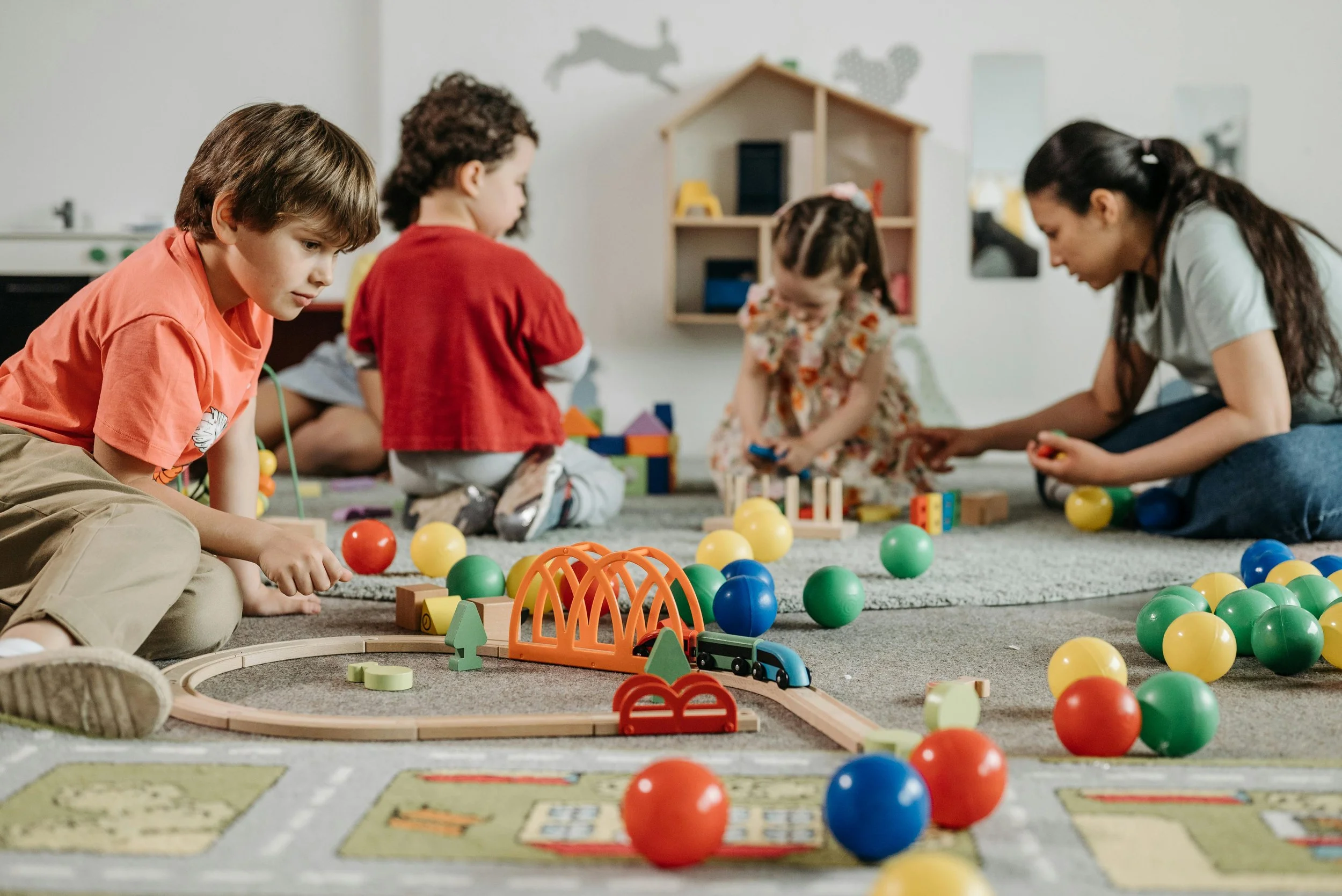
Soft furnishings such as rugs and cushions help absorb sound. Fabric-covered display boards and felt pads on chair legs can reduce scraping and reverberation. Zoning can also be powerful. Consider whether high-energy areas are situated alongside quieter spaces, and how the room's flow supports or amplifies noise.
Review routines and equipment. For example, when music is used, is it purposeful or simply ambient?
Teaching Approaches: Proximity matters. Positioning yourself at a child’s level reduces the need to project your voice and supports clearer communication. Visual prompts can help capture attention without competing with speech. Smaller group sessions can provide focused opportunities for interaction without multiple conversational strands competing at once.
Supporting Regulation: Quiet retreat spaces offer opportunities for co-regulation. Teaching older children to notice how the room feels and co-creating shared expectations around sound can support collective responsibility.
As a team, reflective questions might include: When are our noisiest points? Which children struggle most at those times? Is our layout amplifying sound?
What’s next to support our understanding of how noisy environments impact young children?
The Institute for the Science of Early Years and Youth (ISEY) is currently leading a major Nuffield Foundation-funded study, led by Dr Gemma Goldenberg, examining early-life noise exposure in nursery settings, particularly in disadvantaged communities. In partnership with the Early Years Alliance, the project is recruiting around 250 babies and toddlers across multiple nursery sites. Wearable devices are used to capture real-time sound exposure throughout the day, alongside measures of early language and attention. The study will also evaluate low-cost acoustic adjustments and practitioner training to identify practical approaches to reducing noise exposure in early years provision.
The Final Soundbite: A Conclusion
The next time you enter a busy early year’s setting, pause and listen. Notice the layers of sound that shape the day. If we want every child to develop language, form secure attachments and learn to regulate their emotions, then acoustics must be part of the conversation. The soundscape of an early years setting is not merely background ambience; it influences how children process information, how they connect with others, and how safe they feel within the space.
Leaders may also wish to reflect on the tensions between open-plan design and the evidence from acoustic science. While large, shared spaces can promote visibility and flexibility, they can also increase competing speech and background noise. Importantly, noise does not affect all children equally. Those with developing language, additional needs or heightened sensory sensitivity may experience the greatest cognitive load.
References
Evans, G.W. & Lepore, S.J. (1993) Non-auditory effects of noise on children: A critical review, Children’s Environments, 10(1), pp. 31–51.
Fretes, G. & Palau, R. (2025) The impact of noise on learning in children and adolescents: A meta-analysis, Applied Sciences, 15(8), 4128.doi:10.3390/app15084128
Goldenberg, G., Atkinson, M., Dubiel, J. & Wass, S. (2024) Outdoor learning in urban schools: Effects on 4–5 year old children’s noise and physiological stress, Journal of Environmental Psychology, 97, 102362.
Hygge, S., Evans, G.W. & Bullinger, M. (2002) A prospective study of some effects of aircraft noise on cognitive performance in schoolchildren, Psychological Science, 13(5), pp.470–475.
Klatte, M., Bergström, K. & Lachmann, T. (2013) Does noise affect learning? A short review on noise effects on cognitive performance in children, Frontiers in Psychology, 30 August. doi:10.3389/fpsyg.2013.00578
Scott, S.K., Rosen, S., Wickham, L. & Wise, R.J.S. (2004) Neural basis of informational and energetic masking effects in speech perception, Journal of the Acoustical Society of America, 115(2), pp. 813–821.
World Health Organization (2018) Environmental noise guidelines for the European region. WHO Regional Office for Europe.
Further reading
New study explores how nursery noise affects babies | University of East London
Quiet please! – The impact of background noise on children’s literacy learning — ISEY