
Small ears deserve big conversations: Our first advisory panel meeting
“It takes more than one discipline to understand a child’s world. The strongest research is built when different perspectives are willing to sit around the same table.”
The Institute for the Science of Early Years and Youth (ISEY) is currently leading a Nuffield Foundation-funded study exploring how everyday noise environments in nurseries may influence early communication and attention, particularly for children growing up in disadvantaged communities. Working in partnership with the Early Years Alliance, the project combines wearable technology, observational methods, and educator-informed approaches to better understand children’s experiences in real-world early years settings. If you have not had a chance to yet, you can read our first blog introducing the project here.
One of the most exciting parts of this project so far has been seeing the range of people it is bringing together.
This week, we held our first advisory panel meeting for the Small Ears, Loud World project. Our advisory panel includes researchers, early years leaders, speech and language specialists, policy voices, and experts in acoustics. Some people already knew each other. Others were meeting for the first time. What became clear very quickly was that everybody was arriving with the same broad concern: if babies and toddlers are spending increasing amounts of time in group early education, we need to think more carefully about the environments in which early communication is happening.
This feels particularly important at a time of rapid expansion in early education and childcare provision across England (House of Commons Library, 2025), alongside growing recognition that early environments play an important role in shaping opportunities for communication, interaction, and attention during a highly sensitive period of development (Shonkoff & Phillips, 2000).
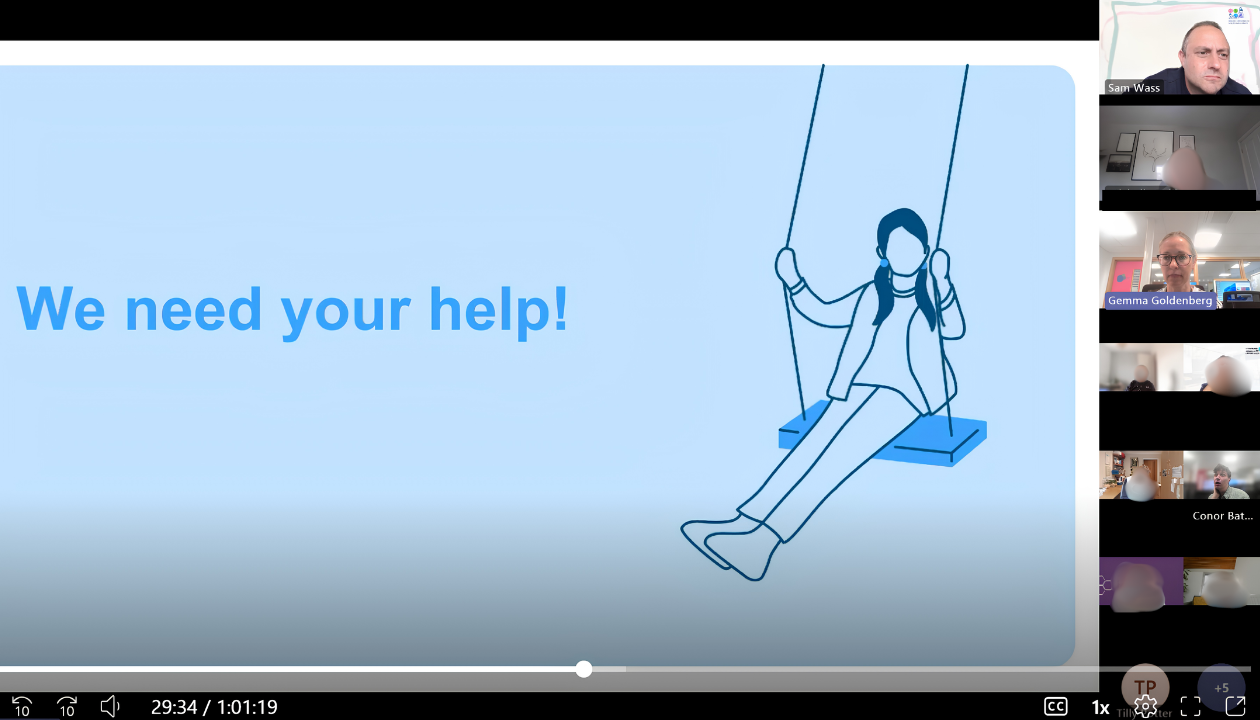
Screen capture from first advisory panel meeting - Seeking support from the panel
Introducing the project to the advisory panel
Dr Gemma Goldenberg (Principal investigator) opened the discussion by outlining the study's aims and the importance of better understanding the relationship among everyday nursery sound environments, communication, attention, and interaction in the early years. We also shared some of the public engagement materials developed for the project, including a series of short animations designed to raise awareness of noise in early childhood settings.
The meeting was not designed as a formality or a “tick box” exercise. From the beginning, the conversation focused on challenge, reflection, and practical insight. What problems have we not thought about yet? What opportunities might we be missing? How do we make this work useful for educators and families, not just researchers?
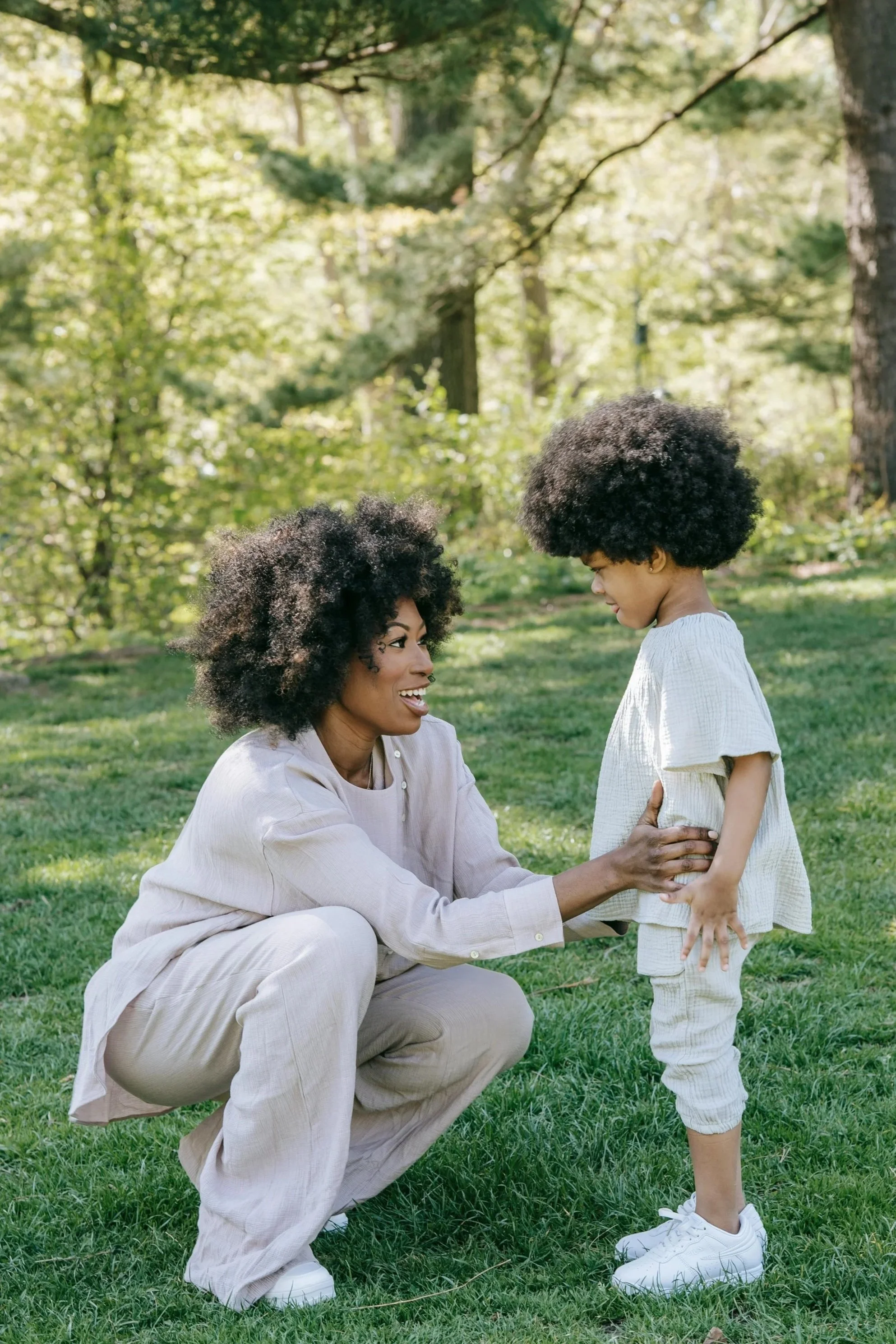
One of the most interesting parts of the discussion centred on something that educators already know instinctively: Communication is far more than words alone.
Developmental research has consistently shown that young children rely heavily on shared attention, facial expression, gesture, and social interaction during early communication and language learning (Goldin-Meadow, 2009; Kuhl, 2007).
In many ways, this is something early years educators have understood for a long time through everyday interaction with children.
As part of the project, we are using wearable technology and multimodal methods to explore children’s experiences in nursery environments. During the discussion, questions were raised about whether the study could also capture the non-verbal side of interaction, including gesture, facial expression, emotional reciprocity, and attention.Professor Sam Wass (Director of ISEY) discussed both the opportunities and limitations here. Some aspects of interaction, such as facial visibility and patterns of expression, can increasingly be explored through automated analysis. Other aspects, particularly gesture and more nuanced social communication, remain much harder to capture reliably at scale. In many ways, this reflects one of the practical challenges of naturalistic developmental research: some socially meaningful aspects of interaction remain difficult to measure reliably at scale.
What are good communication environments?
That conversation led into a wider reflection on what “good communication environments” actually look like for very young children. It is easy to think about noise only in terms of volume, but the discussion repeatedly returned to interaction quality, attention, engagement, emotional regulation, and connection. Several contributors highlighted the importance of making research outputs practical and meaningful for educators working in busy real-world settings.
There was also discussion around how we communicate findings back to the sector. Neil Leitch (CEO for the Early Years Alliance) reflected on the influence that accessible research communication can have in practice, sharing how previous work on attention and distraction had shaped his own thinking. That sparked wider thinking about how evidence moves into everyday practice, and how research projects can support settings beyond simply publishing findings at the end.
Developing collaborative approaches to research
For me personally, one of the strongest reflections from the meeting was the value of interdisciplinary thinking. Research on early childhood environments doesn’t sit neatly within one field. Questions about acoustics quickly become questions about communication, inclusion, wellbeing, pedagogy, regulation, architecture, workforce pressures, and policy. These ideas are always interconnected.
The discussion also reinforced something we have been thinking about throughout the development of this project: educators are not passive recipients of research. They are critical knowledge holders within it. Increasingly, educational and community-based research is recognising the value of collaborative and participatory approaches that keep professional knowledge and lived experience close to the research process itself (Vaughn & Jacquez, 2020).
What Next?
As the project moves into the next phase, including piloting and further development work with nurseries, those conversations will continue to shape the study's direction. The advisory panel is not there to observe from a distance. It is there to challenge us, strengthen the work, and help ensure the research remains connected to the realities of early childhood practice.
And that is exactly what makes this project feel exciting to us. Not just the technology, or the methodology, or even the scale of the research itself. It’s the fact that so many people from different parts of the sector are willing to sit together and seriously ask a simple question and work together to solve it: What does it actually mean for a child to be able to hear, attend, communicate, and navigate the environments where they spend their earliest years and how do we make that accessible and inclusive?
References
House of Commons Library. (2025). Expanding government-funded childcare in England. UK Parliament. https://commonslibrary.parliament.uk/research-briefings/cbp-10288/
Goldin-Meadow, S. (2009). How gesture promotes learning throughout childhood. Child Development Perspectives, 3(2), 106–111. https://doi.org/10.1111/j.1750-8606.2009.00088.x
Kuhl, P. K. (2007). Is speech learning ‘gated’ by the social brain? Developmental Science, 10(1), 110–120. https://doi.org/10.1111/j.1467-7687.2007.00572.x
Shonkoff, J. P., & Phillips, D. A. (Eds.). (2000). From neurons to neighborhoods: The science of early childhood development. National Academy Press. https://doi.org/10.17226/9824
Vaughn, L. M., & Jacquez, F. (2020). Participatory research methods – Choice points in the research process. Journal of Participatory Research Methods, 1(1). https://doi.org/10.35844/001c.13244